
Supporting your child’s regulation and how this can help their sleep.
Young children are still developing the ability to regulate their emotions, energy levels, attention and responses to the world around them. They rely on adults, routines and their environment to help their nervous system move between different states.
When a child is struggling to regulate, you might notice lots of running or jumping, silly or excitable behaviour, difficulty sitting still, big emotions, trouble with transitions or an inability to “switch off” at bedtime.
One simple way we can support regulation is through regular movement and sensory activities throughout the day — including activities often described as “heavy work.”
What is heavy work?
Heavy work involves activities that make the muscles and joints work against resistance. Think pushing, pulling, carrying, climbing, crawling and jumping.
These activities provide proprioceptive input — information from the muscles and joints that helps the brain understand where the body is and how it is moving. For many children, this type of input can feel organising and grounding, helping them feel more settled and ready to engage.
Heavy work can easily be incorporated into everyday play, for example:
🐻 Bear walks, crawling and animal walks
🧱 Pushing against a wall
🧺 Carrying books, toys or laundry
🛒 Pushing a toy trolley or laundry basket
🪢 Tug-of-war
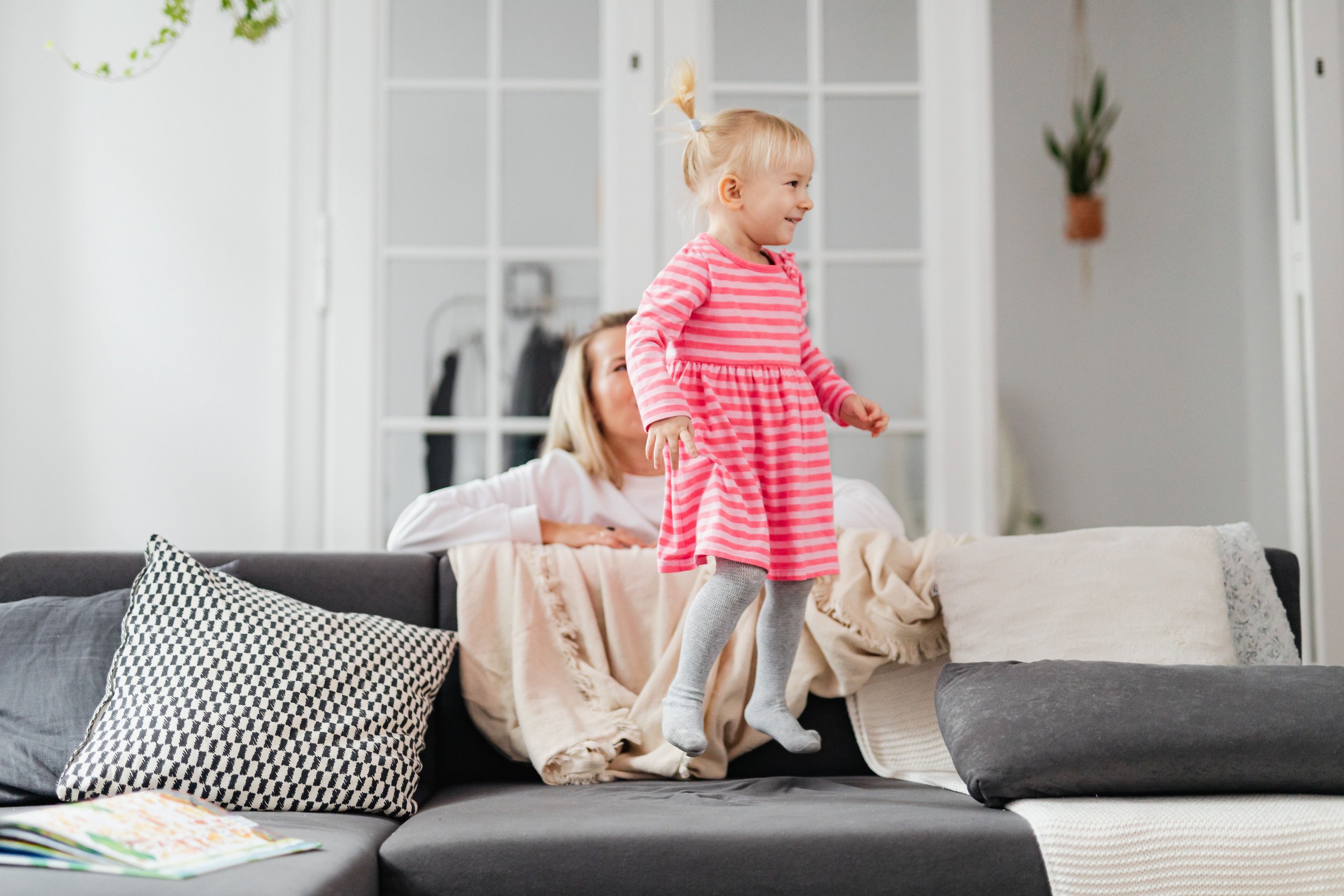
🐸 Jumping, climbing and obstacle courses
🧹 Helping with sweeping, gardening or tidying
✋ Playdough, squeezing and kneading
The aim isn't to exhaust your child or simply “burn off energy”. Instead, think of these activities as giving their nervous system regular opportunities for movement and sensory input throughout the day.
How can this support sleep?
It can be challenging for a child to go from a busy, stimulating day straight into lying quietly and falling asleep. Regular physical activity during the day can support healthy sleep, and research suggests that exercise can improve several aspects of children's sleep, including sleep onset (time taken to fall asleep).
Rather than relying on heavy work immediately before bed, try incorporating movement throughout the day and particularly during the afternoon and early evening, followed by a gradual wind-down.
For example:
Active play → dinner → heavy work → quiet connection & bedtime snack if given → bedtime routine → sleep
This gives your child's nervous system time to gradually shift from an active state towards rest.
Most importantly, regulation isn't about making children calm or still all the time. Children are naturally active and need opportunities to move, explore and play.
It's about helping them learn to move between different states and giving their developing nervous system the support it needs.
So next time your child is climbing, pushing, carrying or crawling around the house, remember — they're not just playing. They're also learning about their body, their environment and how to regulate themselves.